
Speed is Everything
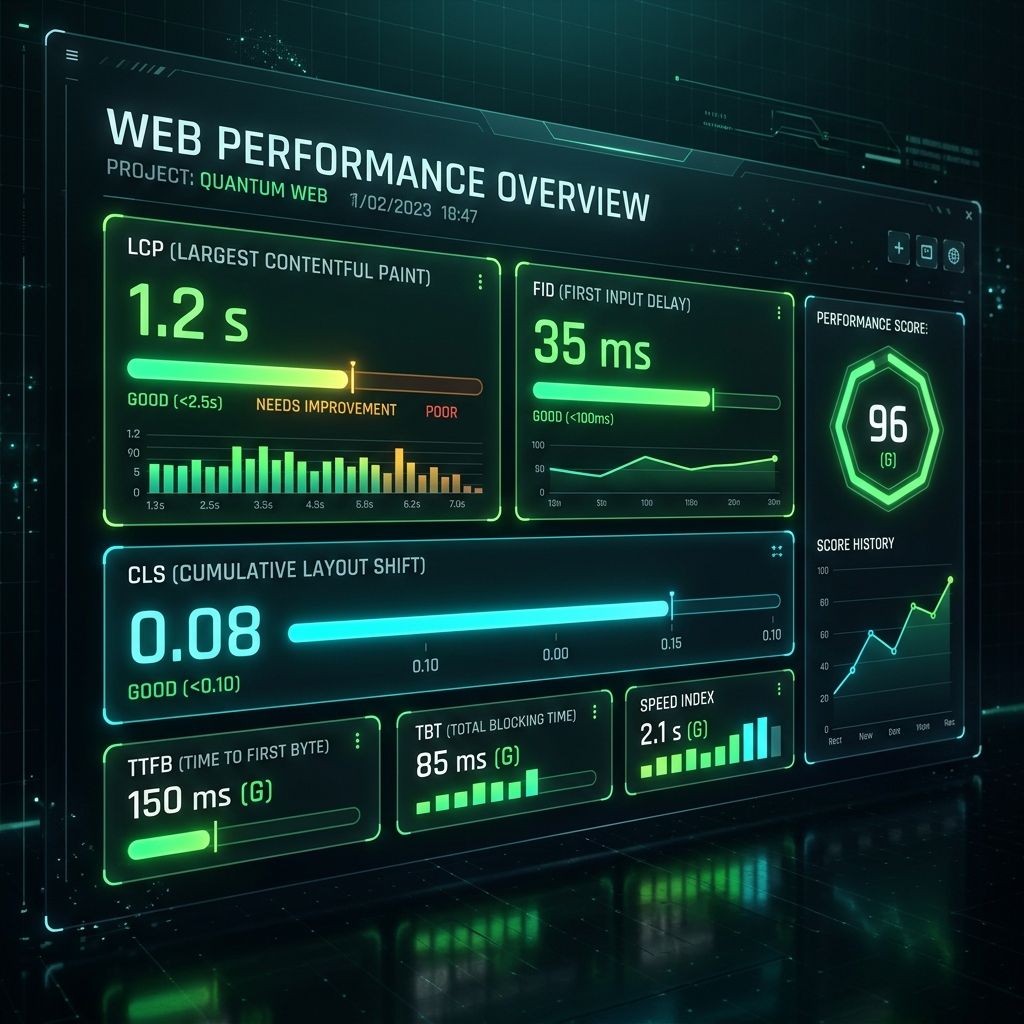
In 2026, a 1-second delay in page load time can lead to a 20% drop in conversions. Users are more impatient than ever, and search engines are even more demanding. Performance optimization is no longer an afterthought—it's a critical part of the development lifecycle.
The Power of Partial Prerendering (PPR)
One of the biggest shifts in Next.js 16 is the stable introduction of Partial Prerendering. PPR allows you to serve a static shell of your page instantly, while dynamic content streams in as it's ready. This effectively eliminates the trade-off between Static Site Generation (SSG) and Server-Side Rendering (SSR).
Implementing Suspense Boundaries
import { Suspense } from 'react';
import { Skeleton } from '@/components/ui/Skeleton';

export default function Page() {
  return (
    <main>
      <h1>My Awesome Page</h1>
      <Suspense fallback={<Skeleton />}>
        <DynamicComponent />
      </Suspense>
    </main>
  );
}
Leveraging Edge Computing
Moving your compute closer to the user with Edge Functions and Edge Middleware can drastically reduce latency. Use the Edge Runtime for lightweight tasks like authentication checks, A/B testing, or localized content delivery.
Image and Font Optimization
We often forget that images and fonts are the largest part of most web pages.
next/image: Always use the built-in image component for automatic resizing, lazy loading, and WebP conversion.next/font: Zero layout shift and automatic font hosting.
Measuring What Matters: Real User Monitoring (RUM)
Synthetic benchmarks (like Lighthouse) are great for development, but RUM gives you the data on how real users are experiencing your site. Tools like Vercel Speed Insights or Datadog RUM are essential for identifying bottlenecks in the real world.
Conclusion
Performance is a journey, not a destination. By embracing modern techniques like PPR and Edge Computing, and keeping a close eye on your real-user metrics, you can build applications that feel instant and keep your users engaged.